

Home / Services / Glare & light filter
Glare off the water
Light-filtering blinds in Newcastle
East-facing rooms near the coast take the hardest light of the day, low and sharp and bounced off the sea. The wrong answer is blacking the room out and losing the morning. The right answer is a fabric that turns that hard light into an even, usable glow.
What a light-filter fabric actually does
A light-filtering roller is a woven or coated fabric that light passes through but eyes can't. Lower it and the glare breaks up: no more squinting at a white-hot window, no more black stripe across the TV, no more sun-bleached patch tracking across the floorboards through the morning.
The room stays bright. That's the point. You keep the daylight you moved here for and lose the part that hurts.
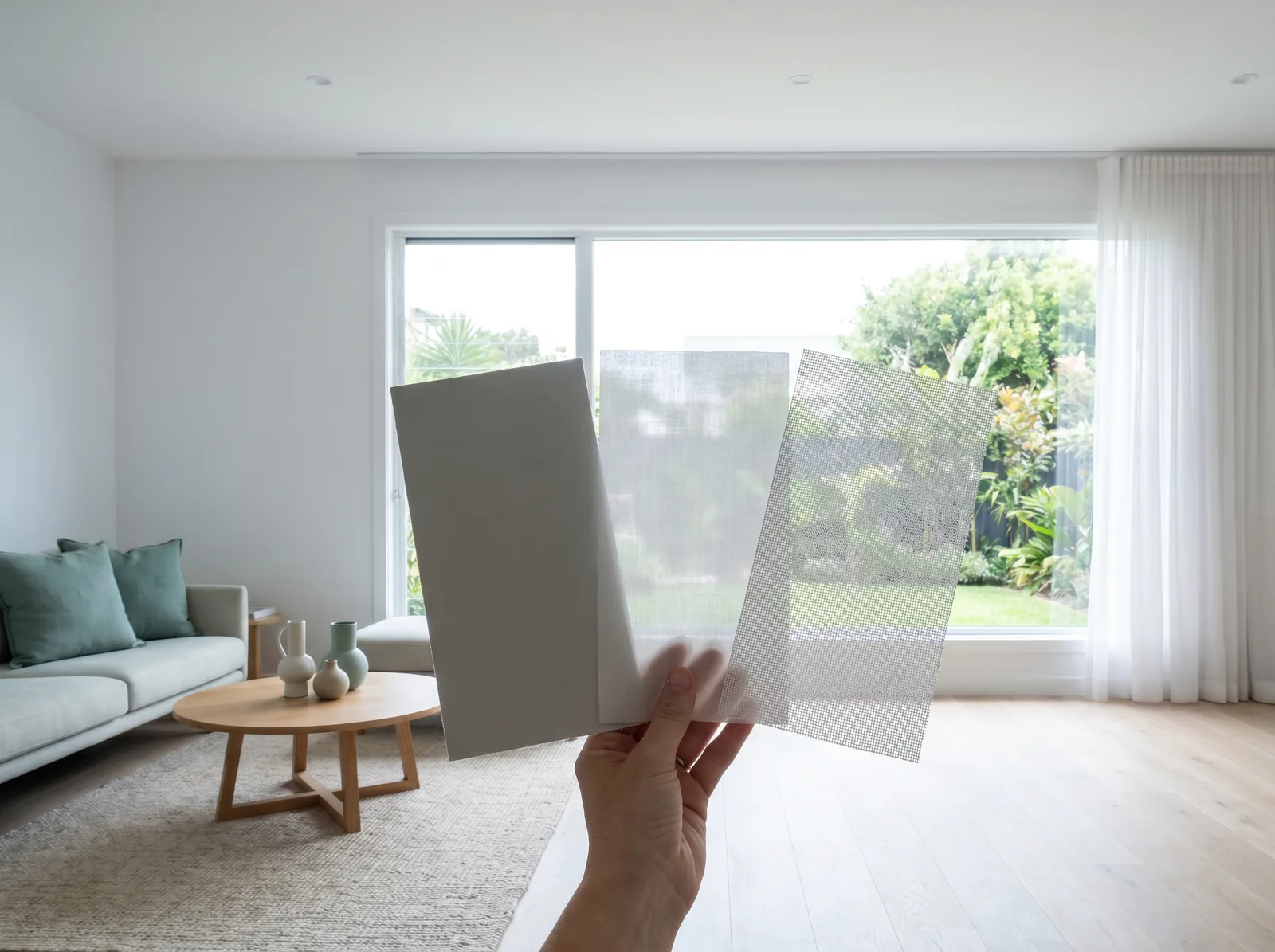
Openness comes in grades, and the grade is a real choice: tighter weaves give softer light and more privacy, opener weaves keep more of the outlook. We bring samples to the measure and hold them against your actual glass at your actual worst hour, because a swatch in a folder tells you nothing about an east window at 7am.
Fade is part of the spec
The same sun that glares also bleaches. Near the water we quote fabrics chosen to hold their colour under UV, and componentry that handles salt air, as standard rather than as an upgrade. There's more on why in the coastal guide.
The honest limits
Light-filter privacy flips at night. By day, the bright side is outside and nobody can see in. After dark the bright side is your lounge room, and a light-filter fabric alone won't hide it. On street-facing glass we usually pair it with a blockout layer on a dual roller, and we'll tell you when your window is one of those.
Glare control isn't heat control. A light-filter fabric softens what you see; it only partly changes what the glass lets in as warmth. If your problem window faces west and the complaint is temperature, start at heat control instead.
No fabric fixes a wrong measure. Glare leaks through gaps just like darkness does. Reveal or face fit, overlap, head height: the fit decisions get made at the measure, in writing.