

Plantation shutters are panels of angled louvres set in a frame and hung on hinges. You swing the panel to open the window, and you tilt the louvres to let light in or keep eyes out. Nothing rolls up and nothing hangs on a cord.
If you're weighing shutters against blinds for a Newcastle home, the answer is usually room by room: steam, afternoon sun, small children and heritage rules each point one way. Blinds Newcastle measures for both, so this guide sets them side by side.
What plantation shutters actually are
The parts of a shutter, and what a louvre angle does
A shutter has four working parts. The frame is fixed around or inside the window. One or more panels hang from it on hinges. Each panel holds a column of horizontal louvres, and a tilt rod or a concealed mechanism turns the louvres together.
That gives you two separate controls. Swing the panels back and the window is fully open to the view and the breeze. Leave them closed and tilt the louvres, and you can choose between level louvres for light and outlook, louvres angled up to block the view from the street while daylight still bounces in, or louvres closed flat for privacy.
The panels can fold, stack or slide depending on how they're configured. That becomes relevant on wide openings and doors, and we come back to it below.
How shutters differ from blinds and curtains day to day
Side by side, day to day
| Day to day | Plantation shutters | Roller or venetian blinds | Curtains |
|---|---|---|---|
| How you open it | Swing a panel. | Pull or wind a cord or chain. | Draw by hand or cord. |
| How you adjust light | Tilt the louvres. | Raise, lower or tilt the slats. | Open or close the fabric. |
| Is a lift cord involved | No. The tilt rod and the hinge do the work. | Often yes. | Sometimes. |
| What it looks like fully open | Panels folded back, louvres level. | Fabric rolled or stacked at the top. | Fabric stacked at the sides. |
The biggest everyday difference is the mechanism. A roller or venetian blind usually goes up and down on a cord or chain. Curtains draw across. A shutter stays in place and moves on its hinges and louvres.
That makes shutters feel more like part of the window than something hung in front of it. Some people love that fixed, architectural look. Others prefer the ability to get a covering completely out of the way, and that tips them towards a blind or curtain.
What the cord safety rules say, and where shutters sit
The same wall, corded and cordless
Loose cord loop must not reach 220 mm or longer at or below this line.
NSW has mandatory safety requirements for window coverings with cords. Corded blinds and curtains "must be installed in a way that ensures a loose cord cannot form a loop 220 mm or longer at or less than 1,600 mm above floor level". Any cleat used to tie off a cord has to sit at least 1,600 mm above the floor.
Those rules implement the national corded internal window coverings standard, which covers any curtain, blind or fitting with a cord. The concern is the same across the country. Western Australia's regulator puts it plainly: "Looped cords and chains from blinds and curtains are a serious safety risk for children."
A plantation shutter's tilt rod and hinged panels don't rely on a lift cord. For a family with young children, that is one practical point in the shutter column. It isn't the whole story. Any corded blinds elsewhere in the house still need to be fitted to the rules above.
Why the window matters so much for comfort
Two separate measures, both about glass
Two different measures drawn on the same scale, not two shares of one total.
The Australian Government's energy advice says almost 90% of a home's heat is gained, and up to 40% of heating energy is lost, through its windows. These are two different measures, but they point the same way. The glass is where your house wins or loses the temperature battle.
The same page recommends close-fitting lined curtains or blinds and pelmets to help with temperature control year-round. Shutters are another kind of covering, and how well any covering performs depends heavily on how snugly it fits the window. We won't give you a performance figure for shutters here. The numbers that circulate online aren't backed by an independent authority we could check.
With spring sun already strong in Newcastle, the practical takeaway is simple. Whatever covering you choose, a good fit on the windows that cop the sun matters more than the style.
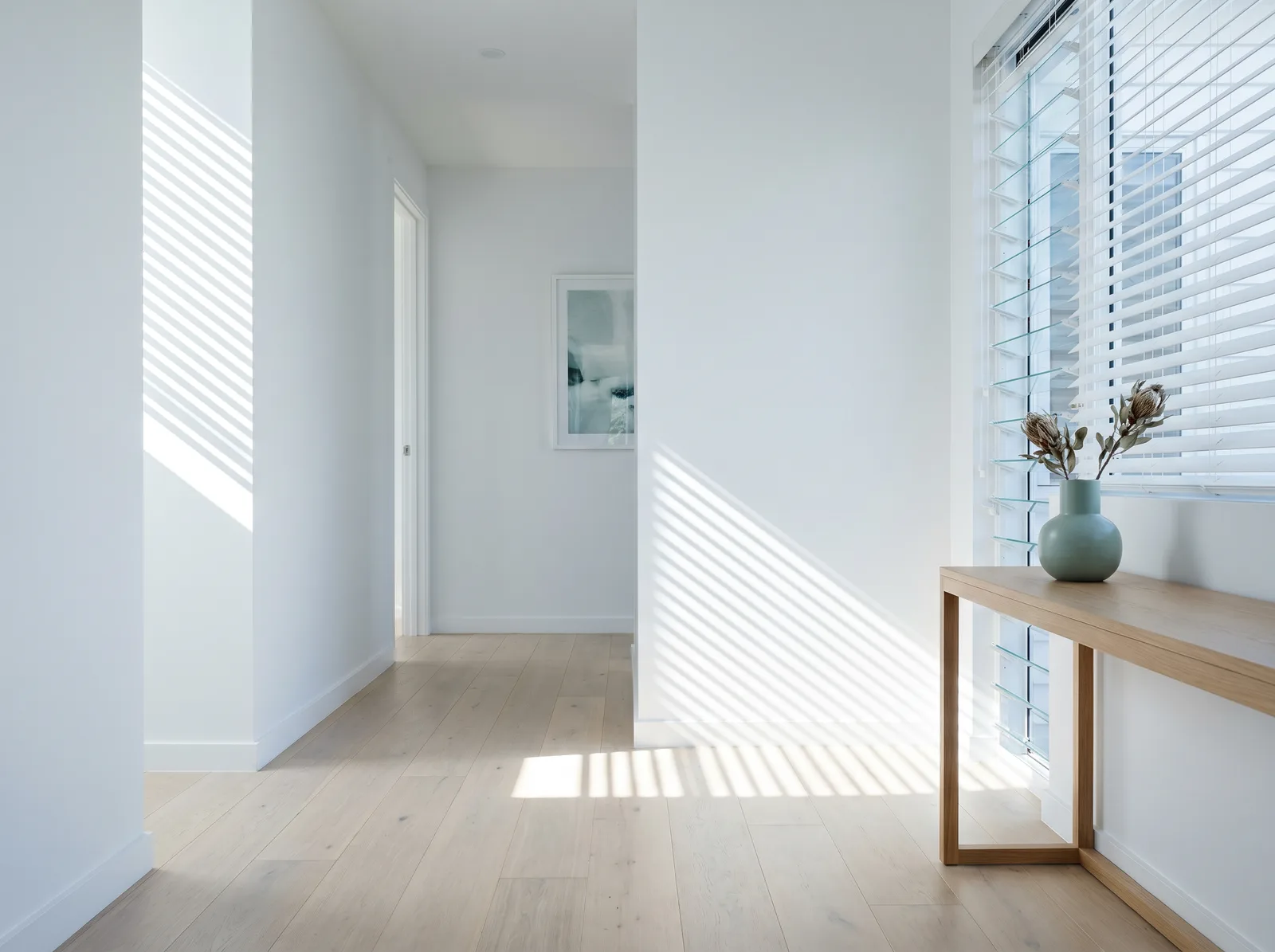
Bathrooms, bedrooms and street-facing rooms: shutter or blind
Walk the house and tick as you go
This is the question most buyers get stuck on, and the answer is usually room by room rather than whole-house.
Bathrooms, ensuites and laundries. Shutter: PVC, sometimes sold as polymer or vinyl, is chosen for rooms where water and steam are part of daily life. Kitchens near the sink are the other usual example.
Bedrooms. Shutter: timber is a natural material. It suits bedrooms where you want a warm, solid look and perhaps a stained finish. Like any timber, it responds to moisture, so steamy rooms deserve a second thought. Blind: if someone sleeps behind the window, the treatment needs a blockout somewhere in it. That can be a single blockout roller, or a dual roller with a light-filter in front for bright, private mornings and a blockout behind for night. Where small children use the room, cordless is the default.
Street-facing rooms. Shutter: timber suits living areas where you want that same warm, solid look, and louvres angled up keep the street's view out while daylight still bounces in. Blind: a light-filter fabric turns direct sun into an even glow, and by day nobody can see in. After dark the privacy flips, because a lit room shows through a translucent fabric, so an overlooked window used at night wants a second, denser layer, usually a blockout on a dual roller.
Plenty of homes mix the two: timber in the lounge, PVC in the bathroom, all finished in the same colour so the house reads as one.
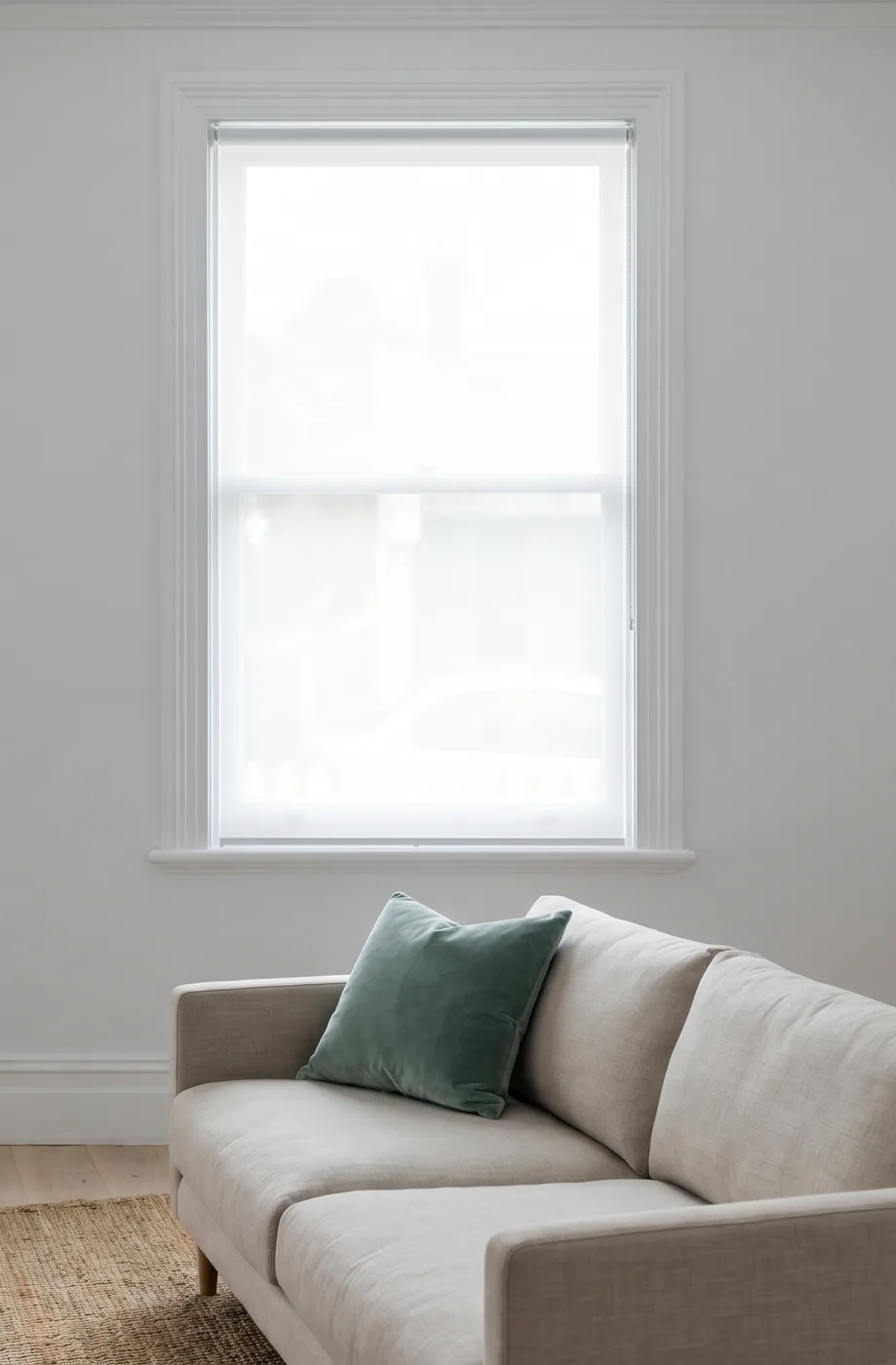
Light control: what shutters do and don't do
Tilted closed, louvres give strong privacy and cut most direct light. They are not a true block-out, though. A little light will find the edges and the gaps between louvres. If you're a shift worker or setting up a baby's room, it's worth reading our guide to blockout, light-filter and sheer before you commit a bedroom to shutters alone.
What shapes a quote, shutter or blind
What shapes your quote
It's the most common question, and any figure quoted without seeing your windows is a guess. What actually shapes a shutter quote is a list of specifics:
- how many windows and doors, and the size of each
- the material, room by room
- how many panels each opening needs and how they fold or slide
- whether the frame sits inside the window reveal or outside it
- unusual shapes such as bays, corners, arches or raked windows
- the louvre size and the finish
- the blind type and fabric
Work through that list for your own home before you ask for quotes. You'll get comparable answers, and you'll know which choices are driving the number.
Heritage home in Newcastle? Check before you change the window
Which side of the line is your job on?
This part matters if you live in one of Newcastle's older streets. City of Newcastle says that "if your property is a heritage item or located in a heritage conservation area, most building works require development consent". Minor or maintenance work that doesn't affect heritage significance may not need it, and the council assesses each case.
That rule is about building work broadly. A covering fitted inside an existing window is a different job from replacing windows, altering frames or changing what the street sees. If your shutter plans come bundled with any of those, talk to City of Newcastle before anything is ordered. If you're unsure which side of the line your job falls on, ask the council. It's a quicker conversation than undoing work.
Your next step
Before you talk to anyone, walk the house with a notepad. Note which rooms get steam, which windows take the afternoon sun, whether small children use the room, and whether the property is heritage-listed or in a conservation area. That list answers most of the material and room questions above.
When you're ready to go through it window by window, book a free measure with Blinds Newcastle and bring the list with you.
Sources
- https://www.energy.gov.au/households/windows
- https://www.nsw.gov.au/legal-and-justice/consumer-rights-and-protection/safety/other-consumer-products/blind-and-curtain-safety
- https://www.consumerprotection.wa.gov.au/blind-and-curtain-cord-safety
- https://cn.t1cloud.com/apps/KnowledgeBase/MyServices/article/Heritage-Minor-Works